
Things slip. See them slip early.
Work management for teams that want to keep things tight. SRP shows the whole team who is overloaded and what is at risk, before the deadline does. Nobody logs hours to prove they worked. No status theater.
30-day free trial
No credit card required
Free plan when the trial ends, nothing locked
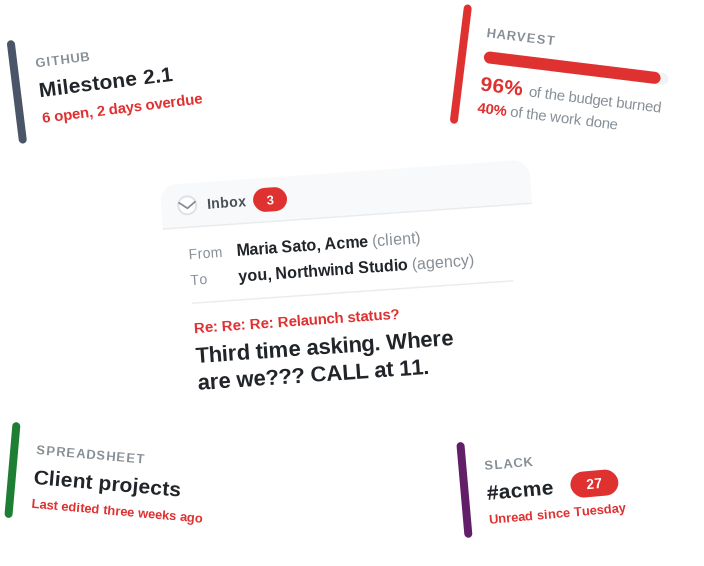
Teams are humans, not robots.
Things slip because everyone is head down, not because anyone is lazy.
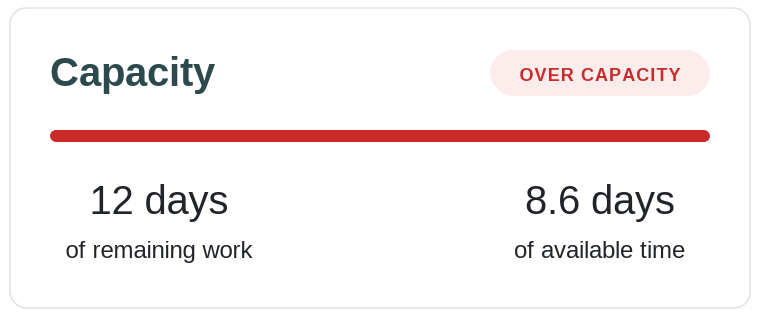
No tool is magic. If a team does not care, no software fixes that. SRP is for teams that want to help themselves and need one clear picture to do it. It keeps the window tight: who carries too much, what is late, what went quiet. Early enough to fix it cheaply.
How SRP keeps it tight.
Two rough inputs. One honest picture.
Size the work roughly
How hard is this task? Small, medium, large. No hours, no estimates in minutes that nobody will keep. You know roughly, and roughly is enough.
A capacity per person
One slider per person for how much they can carry, set from their experience and how long they have been on the team. Leave, meetings and a heavy week take from it. Everyone can see who is stretched, not only the manager.
Health does the arithmetic
Due dates, sizes, capacity, blockers and decisions that went quiet become one honest signal per project and per person. Red shows before the deadline does. Nobody sets a status.
Nobody sets a status. Nobody fills in a timesheet for SRP. The picture is there anyway.
Life happens. SRP recalculates.
1. Set up
Add your people and give each a capacity. Add the work, size it, give it a due date. That is the whole setup.
2. Things change
Someone takes leave. A client meeting eats Tuesday. A task turns out harder than it looked. Add it, and SRP recalculates.
3. Everyone sees it
Not a dashboard for the boss. The whole team sees the same health view, so whoever has slack picks something up before anyone asks.
Everything in one place.
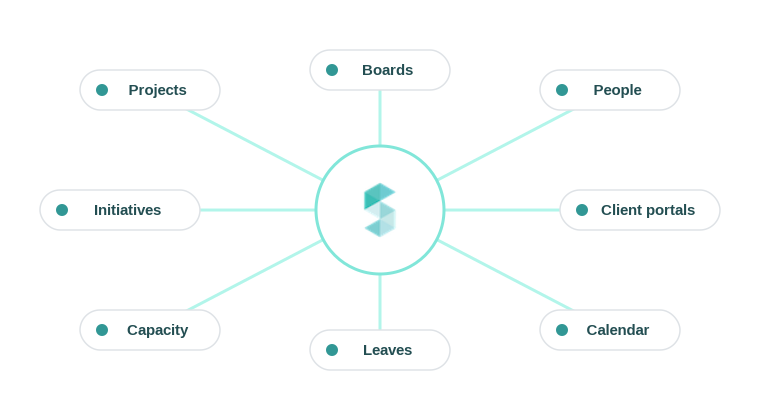
SRP is a full work management tool on its own. Projects, boards, people, capacity, leave, calendar, knowledge, client portals. One place the whole team opens. Already on GitHub, GitLab, Harvest or Toggl? SRP reads them and the health picture fills on its own. Anything else, link it by URL. Either way, size the work, set the capacity, and the rest works the same.
Ask it from your agent.
SRP is an MCP server on every plan. The answer the dashboard shows, your agents can ask for too.
Plug Claude, ChatGPT Desktop, Cursor, Copilot, or any MCP client into SRP with a personal token. The agent acts as you: same role, same permissions, same answers.
Ask who is overloaded, file the work, check capacity and who's on leave. You don't open another board. You don't paste a status update. The answer the dashboard already computes is simply there when an agent asks.
Ask who is overloaded
"Who is overloaded this week?" returns the same answer the health view shows.
Act on the work
Create and update initiatives, work items, tasks, leave requests, and calendar events.
Same permissions as you
A personal token is you. Revoke it and the agent is out.
You
Who is overloaded this week?
SRP
Nick: over capacity. Three tasks due Friday, on leave Thursday. Acme Relaunch goes at risk if nothing moves.
The same answer. Now your agents can hear it.
Claude Code
Claude Desktop
ChatGPT Desktop
Cursor
Copilot
Windsurf
Any MCP client
We love working with teams.
We use SRP to build SRP, every day. A request reaches the people who build it, and it gets an answer. Not a ticket number. When a team tells us where the work hurts and the fix belongs in SRP, we build it together and every team gets it. When it does not belong, we say so and why.
The Knowledge module started as one team's request. Read how it was in production three days later
Built for teams that want to keep things tight.
Small agencies and studios
3 to 30 people, the same people on several clients at once. Who want the whole team to see who is stretched, not only the owner, and to hear about a slip while it is still cheap to fix.
In-house teams that depend on each other
Marketing, design, IT. Each has its own work, and half of it depends on another team. Nobody sees the whole picture until a handoff slips.
Team leads and new managers
Who keep the picture in their head and rebuild it every Monday evening. Who want that picture to exist, visible to everyone, whether or not they built it this week.
Still have questions?
Keep it tight.
See it slip early. 30-day free trial, no credit card.